


Lead Auditor Requirements: Education, Experience and Certification (2026)
What are the requirements to become a lead auditor? Education background, work experience, the 5-day accredited course, the exam, and audit-day requirements, plus how Exemplar Global and CQI/IRCA differ and what ISO 19011 expects.
Eren İŞMAN · Lead Trainer — Exemplar Global Registered Training Provider
There is no single degree or exam that makes you a lead auditor. Certification bodies define a set of requirements that work together: a certain education background, work experience in a relevant field, a 5-day course from an accredited provider, an exam, and audit days accumulated after the course. This guide walks through the lead auditor requirements one by one, shows how Exemplar Global and CQI/IRCA differ, and covers the personal attributes ISO 19011 expects.
Key Takeaways: the five core lead auditor requirements
- Education background: usually post-secondary education (a bachelor's degree is preferred); a strict degree requirement is rare in the schemes themselves, but a degree helps with course admission and corporate hiring.
- Work experience: typically 4–5 years in total, with at least 2 years in a management system field (quality, environment, health and safety, information security, and so on).
- Accredited course: a 5-day / 40-hour lead auditor course from a provider registered with the certification body. On the CQI/IRCA quality scheme the course code is PR328.
- Exam: a written exam at the end of the course; a pass mark around 70% is common, plus a nonconformity-writing exercise.
- Audit experience: logged audit days by grade. CQI/IRCA Lead Auditor grade: 3 complete audits as audit team leader, at least 15 team-leader days, of which at least 10 on site (CQI/IRCA, retrieved 29 August 2026). You have 5 years after the course to complete this experience.
What are the lead auditor requirements? (Short answer)
To become a lead auditor you must meet all of the education, work experience, accredited training, exam, and audit-log requirements. Training and the exam are completed in a week; the experience and audit-day requirements take time.
| Requirement | Typical expectation | When it is completed |
|---|---|---|
| Education background | Post-secondary / bachelor's (strict requirement rare) | Before application |
| Work experience | ~4–5 years total, ≥2 years in a management system field | Before application |
| Accredited lead auditor course | 5 days · 40 hours, registered provider | 1 week |
| Exam | Written + nonconformity exercise, ~70% pass | End of course |
| Audit experience (log) | Number of audits and days by grade | After the course, up to 5 years |
1. Education background: Is a degree required?
Most certification schemes do not set a strict degree requirement. The CQI/IRCA quality scheme expects, for course admission, "ideally a higher education qualification related to quality"; the decisive factor is work experience. A degree still helps in three ways:
- Corporate certification bodies and consultancies often require a degree when hiring.
- In technical disciplines (medical devices, information security, energy), a relevant engineering or science degree counts as evidence of sector knowledge.
- Where years of experience are short, a relevant master's degree may substitute for part of the experience in some schemes.
In short: no degree does not close the door, but you will need to present your experience evidence more strongly.
2. Work experience and management system experience
Experience is the most critical component of the lead auditor requirements. The general framework:
- Total work experience: roughly 4–5 years of full-time work.
- Management system experience: at least 2 years of that directly related to the discipline you will audit — quality assurance, process management, compliance, health and safety, environmental management, or information security.
- Discipline alignment: for an ISO/IEC 27001 lead auditor, a background in information security or IT governance; for ISO 22000, a food safety background. Because quality (ISO 9001) is the most widely accepted field, sector-agnostic experience is usually sufficient there.
Trainer's note: you present years of experience by evidencing them, not by asserting them. A grade application asks for employer confirmation, job descriptions, records of the internal audits you took part in, and management review minutes. Keeping these records from the start is far easier than reconstructing months of history at application time.

3. An accredited lead auditor course
You must complete a 5-day / 40-hour lead auditor course from a provider that is registered with the certification body. On the CQI/IRCA quality scheme this course is coded PR328, with an indicative duration of 40 hours (CQI/IRCA, retrieved 29 August 2026).
Two things to watch:
- The provider's accreditation. The organization you train with must be registered with the certification body at that time. Exemplar Global recognizes training completed with a registered provider for 10 years from the completion date (Exemplar Global, retrieved 29 August 2026).
- The validity window. Some schemes require the training certificate to have been issued within the last 3 years for a certification application. Do not take the course very early and then delay certification for years.
The course can be delivered online (virtual classroom), in the classroom, or in-house. The format does not affect the certificate's validity; the provider's registration does.
4. The exam
The course ends with a written exam, usually on the last day. It has two parts:
- Knowledge part (multiple choice or short answer): ISO 19011 audit principles, clauses of the standard, and the audit process.
- Application part (open-ended): writing a nonconformity from a given scenario. A good nonconformity has three parts: the situation observed, the requirement not met (a clause of the standard or a procedure), and the objective evidence that supports it.
The pass mark varies by provider and scheme; around 70% is common practice, and some providers run the exam open-book. Open-book format tests your ability to use the standard quickly and accurately rather than to memorize it.

5. Audit experience and the audit log
A course certificate alone does not make you a certified lead auditor. After passing, you apply to a certification body and start accumulating the audit days required for your grade.
The CQI/IRCA grades (quality scheme) are determined by experience gained after the course:
| Grade | Experience requirement (after the course) |
|---|---|
| Auditor | 4 management system audits totalling 20 days; at least 15 of those as on-site audit activity |
| Lead Auditor | 3 complete management system audits as audit team leader; at least 15 team-leader days; at least 10 of those on site |
Source: CQI/IRCA IRCA Grades (retrieved 29 August 2026). You have a maximum of 5 years after completing the course to accumulate this experience.
On the Exemplar Global side, personnel certification is based on ISO/IEC 17024 and is valid for 3 years; where a knowledge exam is not available it may be substituted with an audit log of 10 audit days reflecting the relevant scheme and grade (Exemplar Global, retrieved 29 August 2026).
How to keep an audit log
For every audit, record: the date, duration (days), standard, audited organization and sector, audit type (first-, second-, or third-party), the role you held (team member / team leader), the number of on-site days, and the audit scope. This log is the core evidence for your grade application and should be kept from your first audit.
Personal attributes under ISO 19011: the requirement most candidates skip
Certification requirements measure education and experience. But ISO 19011:2018 Clause 7 says auditor competence comes from four sources: education, work experience, auditor training, and audit experience. On top of that, the standard expects certain personal behaviours in auditors:
- Ethical, fair, and discreet
- Open-minded; willing to consider alternative viewpoints
- Diplomatic and observant
- Perceptive, versatile, and tenacious
- Decisive and self-reliant; acting with fortitude under pressure
- Culturally sensitive and collaborative within a team
For a lead auditor (audit team leader), the standard adds team-leadership competence: directing the team, allocating work, managing conflict, and making sure the team achieves the audit objectives together. These attributes are assessed through role-play exercises during the course and are where a lead auditor is most tested on their first audits.
Source: ISO 19011:2018, Clause 7.2 (commentary summary: PRETESH BISWAS, retrieved 29 August 2026).
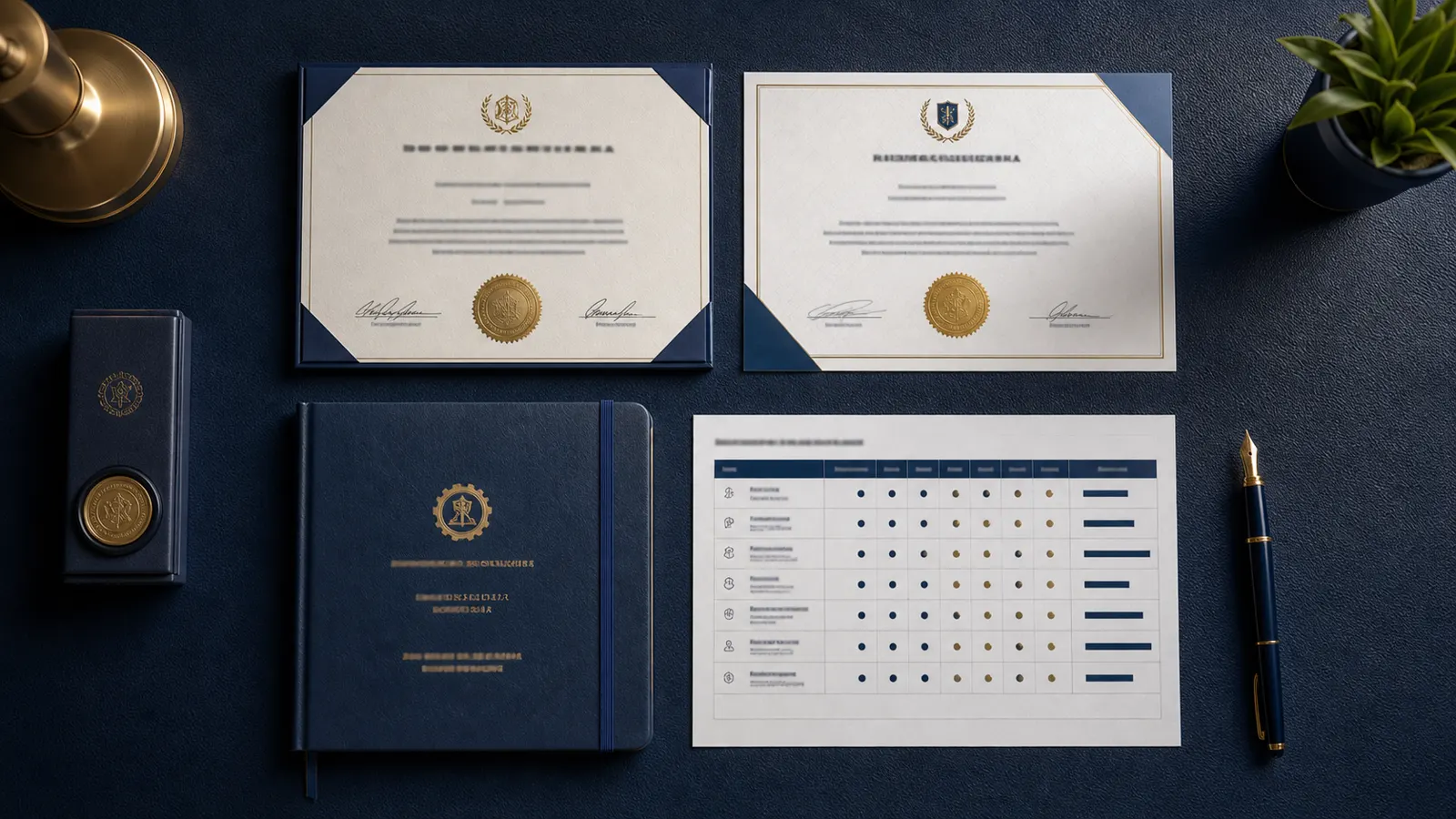
How requirements differ by certification body
| Body | Training recognition | Experience / grade | Certificate validity |
|---|---|---|---|
| Exemplar Global | 10 years with a registered provider (some schemes 3 years) | Knowledge exam or a 10-audit-day log; QM + AU competency units | 3 years (ISO/IEC 17024) |
| CQI/IRCA | PR328, 5-year experience window after the course | Auditor: 4 audits / 20 days · Lead Auditor: 3 team-leader audits / 15 days / 10 on site | Annual membership + CPD and evidence of active auditing |
| PECB | Through a registered training partner | Paired lead implementer + lead auditor structure; audit days by scheme | 3 years, renewed with CPD |
Decide which body to pursue based on which credential the employers you are targeting recognize. Many accredited courses open both the Exemplar Global and the CQI/IRCA path with a single course.
If you don't meet the requirements yet: interim steps
- Start as an internal auditor. Joining the internal audit programme builds management system experience and creates the first entries in your audit log.
- Take foundation / awareness training. A lead auditor course does not teach the standard from scratch; completing the relevant foundation course first improves exam performance.
- Join an audit team as a team member. The lead auditor grade requires audits performed "as team leader"; to get there you first need experience as a team member.
- Collect records from the start. Job descriptions, internal audit records, employer confirmation — a grade application asks for all of them.
Your next step
Meeting the lead auditor requirements is easier when you move in the right order: clarify your education background and experience, take a 5-day course from an accredited provider, pass the exam, and keep an audit log from your first audit.
As an Exemplar Global registered training provider, MEGADEMİ offers lead auditor training across more than 20 ISO standards. Browse the lead auditor course catalogue or contact us for upcoming dates.
Frequently Asked Questions
How many years of experience do you need to become a lead auditor?
Most schemes expect 4–5 years of total work experience, with at least 2 in a management system field. After training and the exam, accumulating the audit days required for a grade (for example, 15 team-leader days for the CQI/IRCA Lead Auditor grade) usually takes another 1–3 years.
Can I become a lead auditor without a bachelor's degree?
Most certification schemes do not set a strict degree requirement; work experience is the deciding factor. But a degree is usually expected in corporate hiring and technical disciplines, so you will need to present strong experience evidence.
Is a course certificate enough to become a lead auditor?
No. A course certificate shows you have "completed lead auditor training," which many job applications accept. But the "certified lead auditor" credential requires a separate application to a certification body and completion of the experience requirement.
How long is a lead auditor course valid?
The course completion certificate itself does not expire, but some schemes require training taken within the last 3 years for a certification application. Exemplar Global recognizes training from a registered provider for 10 years.
Is an online lead auditor course valid for certification?
Yes. Validity comes not from the format but from the provider being registered with the certification body. Live online training from an accredited provider leads to the same certificate as classroom training.
Conclusion
Lead auditor requirements come down to five headings: education background, work experience in a relevant field, a 5-day course from an accredited provider, the exam, and audit days accumulated after the course. To these, add the personal attributes ISO 19011 expects and, for a lead auditor, team-leadership competence. The exact numbers vary by certification body, so before applying, check the current requirements document of the body you are targeting (Exemplar Global or CQI/IRCA).
Sources
- CQI/IRCA — QMS Auditor / Lead Auditor course (PR328) and IRCA Grades (grade experience requirements; 5-year window): https://www.quality.org/training/qms-auditor-lead-auditor-course · https://www.quality.org/IRCA-grades
- Exemplar Global — QMS (ISO 9001) Auditor certification requirements (training recognition windows; 10-audit-day log; 3-year validity; QM + AU competency units): https://exemplarglobal.org/certification/quality-management-system-iso-9001-auditor/ · PCD28 QB-QMS: https://exemplarglobal.org/documents/certification-requirements/latest/pcd28-qb-qms-certification-requirements.pdf
- ISO 19011:2018 Clause 7 — Competence and evaluation of auditors (personal behaviour, knowledge and skills; additional team-leader competence). Commentary summary: https://preteshbiswas.com/2023/12/07/iso-190112018-clause-7-competence-and-evaluation-of-auditors/
Certification requirements are updated by the bodies from time to time. Verify the official requirements document for the relevant scheme before applying.